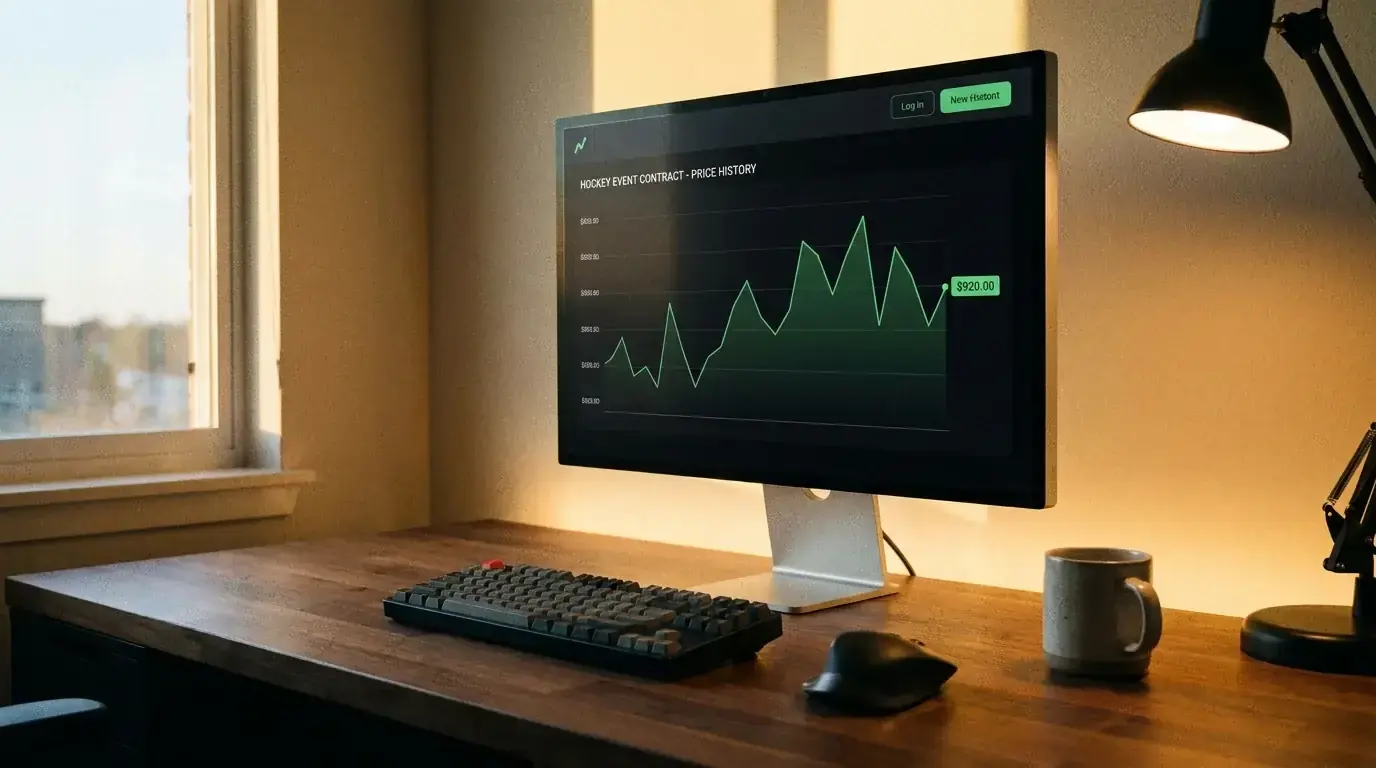

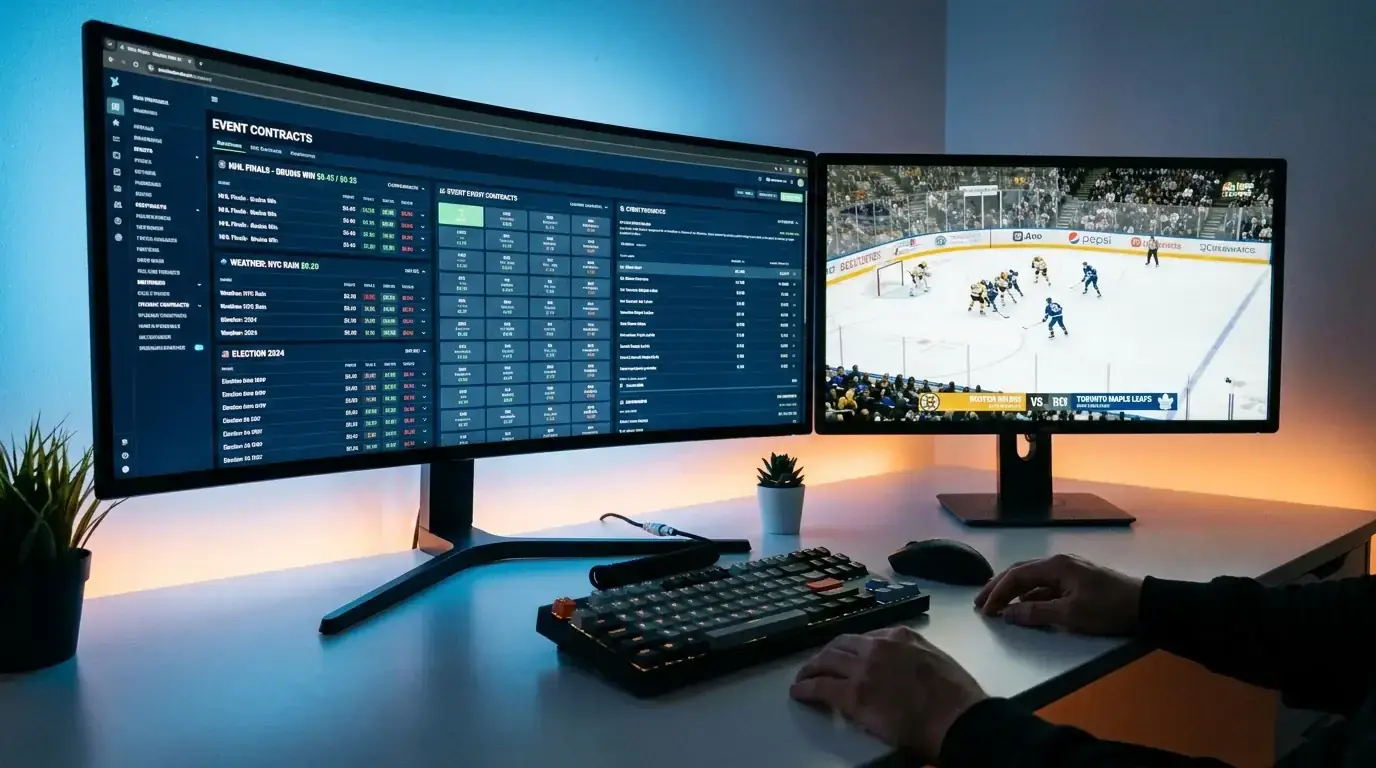
In October 2025, the NHL did something no other major North American sports league had done before — it signed official, multi-year partnerships with prediction market platforms Kalshi and Polymarket. That move was not a press release formality. It signalled that the league sees event contracts as a legitimate, complementary channel for fan engagement and wagering, and it opened a door that UK bettors should understand even if they cannot walk through it yet.
I spent the first few months after the announcement studying how prediction markets priced NHL outcomes compared to traditional sportsbooks. The differences were subtle but real, and they revealed things about market efficiency, public sentiment, and information flow that changed how I think about pricing across all platforms.
Prediction Markets vs Traditional Sportsbooks
A traditional sportsbook sets odds based on an internal model, adjusts for liability exposure, and builds in a margin. You bet against the house. A prediction market works differently: you buy and sell contracts that pay out a fixed amount if an event occurs. The price of the contract reflects the market’s collective estimate of the probability. If a contract for “Colorado to win the Stanley Cup” trades at 0.12, the market implies a 12% probability — and you can buy at that price if you think the true probability is higher, or sell if you think it is lower.

Tarek Mansour, the CEO of Kalshi, described the NHL partnership as an important milestone, noting that having a league like the NHL embrace the platform is a testament to the integrity, safety, and trust that Kalshi has spent years building. That framing matters because prediction markets have long operated in a regulatory grey zone, and the NHL’s endorsement lends credibility that accelerates mainstream adoption.
The practical difference for bettors is liquidity and price discovery. Traditional sportsbooks are thick markets on popular NHL games — the moneyline on a Saturday night rivalry match will be priced within a penny of fair value across multiple operators. Prediction markets, by contrast, are thinner on individual games but can be more efficient on longer-dated outcomes like division winners and Cup champions because participants include traders with financial-market expertise, not just sports bettors. I have observed Kalshi’s Cup contract prices leading sportsbook odds by six to twelve hours on several occasions, which suggests prediction-market participants react to roster news and injury updates faster than the general betting public.
The NHL Partnership Context
The NHL already works with FanDuel, DraftKings, ESPN BET, BetMGM, and Caesars as official betting partners. Adding prediction markets to that ecosystem is a strategic expansion, not a replacement. Gary Bettman, the league’s commissioner, framed the arrangement around integrity, stating that the NHL’s agreement with the CFTC enhances the comprehensive monitoring systems already in place and is fundamental to the trust fans and partners place in the game.

What makes prediction markets attractive to the league is the data they generate. Every trade on a Kalshi or Polymarket contract is a revealed preference — a real-money signal of what informed participants believe about a future outcome. The NHL can use that data alongside its existing integrity monitoring to detect anomalies. If a prediction market suddenly reprices a team’s contract without any public news, that movement becomes a flag for investigation. Traditional sportsbook line movement serves a similar function, but prediction markets add a second, independent data stream.
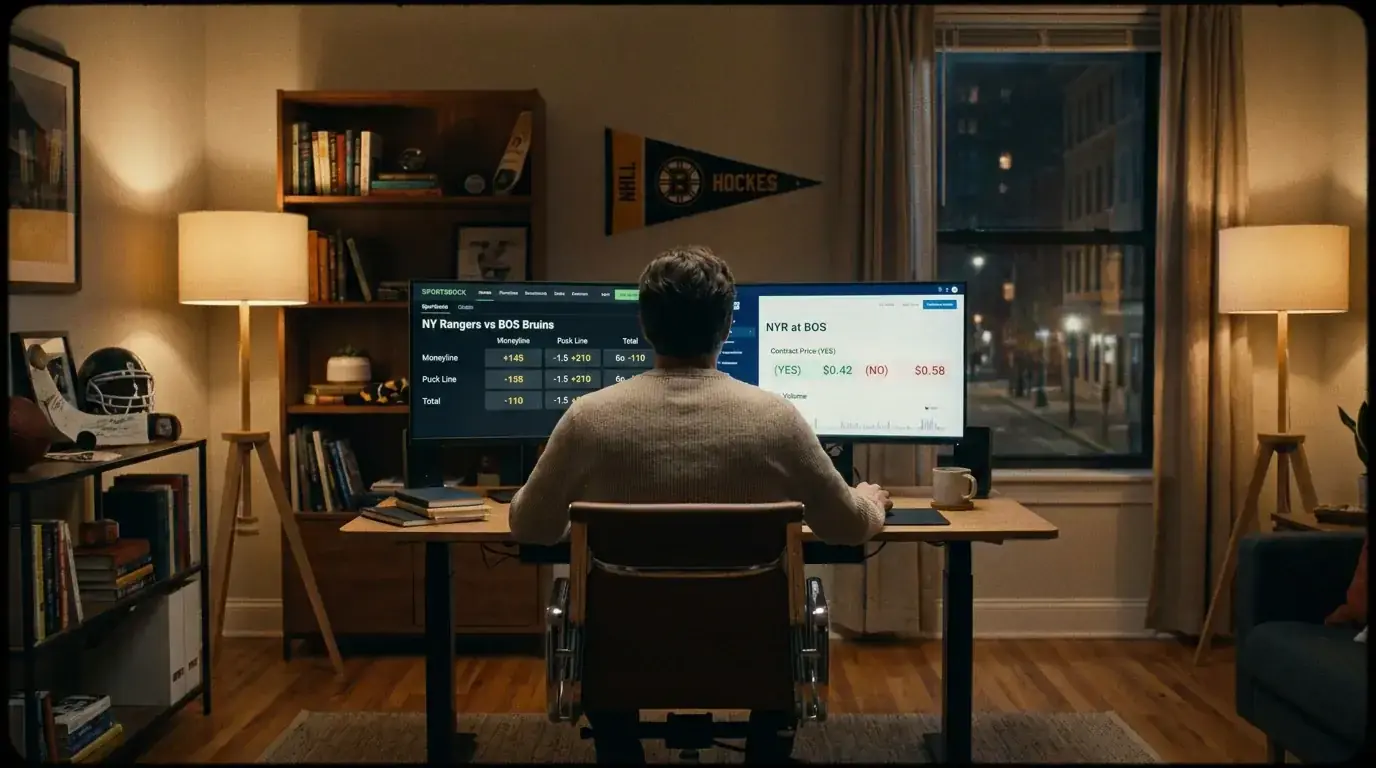
For bettors, the partnership creates a cross-referencing opportunity. When the sportsbook odds and the prediction market price agree, the market is efficient and there is little to exploit. When they diverge — and they do diverge, particularly around trade deadlines and coaching changes — one of the two is wrong, and the sharper information flow typically lives in the prediction market. I use that divergence as a signal rather than a direct betting vehicle, because most UK bettors cannot access Kalshi directly.
UK Access and Limits
Here is the reality for UK punters: Kalshi is regulated by the US Commodity Futures Trading Commission and is currently available only to US residents. Polymarket operates in a more decentralised structure and has faced its own regulatory scrutiny. Neither platform is licensed by the UK Gambling Commission, which means using them from the UK ranges from technically prohibited to practically difficult.

The UKGC issued 741 cease-and-desist orders to unlicensed operators between April and December 2025 and reported nearly 398,000 illegal URLs to search engines. That enforcement posture extends to any platform offering wagering products to UK residents without a licence. I do not recommend circumventing these restrictions — the consumer protections that come with UKGC licensing exist for a reason, and the absence of those protections on offshore or unregulated platforms exposes you to risks that no potential edge can justify.
What UK bettors can do is use publicly available prediction market prices as an informational tool. Kalshi’s NHL contract prices are visible without an account. Checking where the prediction market prices a team’s Cup probability before you place a futures bet with your UK bookmaker gives you a second opinion that most of your fellow punters will not bother to consult. That information asymmetry — using data from a market you cannot trade on to improve decisions in a market you can — is a legitimate, legal edge that costs nothing to acquire.
Where Prediction Markets Fit in the Future
The regulatory landscape around prediction markets is evolving rapidly. If the UK government eventually introduces a framework for event contracts similar to what the CFTC provides in the United States, UK bettors could gain direct access to platforms like Kalshi. Until then, the value of prediction markets for UK punters is informational, not transactional. Watch the prices, note the divergences, and let the crowd intelligence of a parallel market sharpen your own analysis. The NHL’s decision to partner with these platforms confirms that the future of sports wagering is multi-channel, and the bettors who prepare for that future now will have the steepest learning curve behind them when it arrives.