


I opened my first UK betting account specifically for NHL in 2019. The experience was, to put it politely, underwhelming. The operator I chose had NHL moneylines and nothing else — no puck lines, no period markets, no player props. Trying to bet hockey at a site built for Premier League punters felt like ordering sushi at a chippy. Technically possible, but nobody involved was happy about it.
Things have improved dramatically. The UK’s online gambling market generated 7.8 billion GBP in gross gambling yield in the year to March 2025, growing 13.1% year-on-year, and that expansion has dragged NHL coverage along with it. Sports betting accounted for more than half of online gambling revenue in 2024, and the operators competing for that revenue have recognised that niche sports — hockey included — attract a loyal, data-savvy customer base worth serving properly.
This guide isn’t a ranking. I’m not going to tell you which site is “the best” because the answer depends on what you need. What I am going to do is give you the criteria that matter for NHL betting specifically, so you can evaluate any platform yourself and make an informed choice.
Evaluation Criteria: What Actually Matters for NHL Bettors
Not all UKGC-licensed bookmakers are equal when it comes to hockey. Some offer deep NHL coverage as part of a broad multi-sport platform; others bolt it on as an afterthought with bare-minimum markets and wide margins. The criteria I use to evaluate an operator for NHL betting are specific to the sport and often different from what you’d prioritise for football or racing.
Market depth is first. An operator worth using for NHL should offer at minimum: moneyline, puck line, full-game totals, period moneylines, period totals, and a selection of player props. If you can’t find player shot props or goaltender save props, the platform is treating hockey as a secondary sport and probably isn’t pricing it competitively.
Odds competitiveness is second. UK remote betting generated 599 million GBP in GGY in Q4 2025 alone, and the operators driving that revenue compete aggressively on football pricing. Hockey pricing is a different story — margins can vary wildly between platforms because fewer punters are checking. I keep accounts with multiple operators and compare odds before every bet. The difference between 1.87 and 1.95 on the same selection is the difference between a profitable season and a mediocre one.
Cash-out availability on NHL markets matters if you use that feature. Not every operator offers partial or full cash-out on hockey, and the ones that do sometimes restrict it to moneylines only. If your strategy involves hedging live positions, confirm cash-out coverage before you commit.
Finally, data and statistics integration. Some platforms display recent form, head-to-head records, and basic stats directly on the betting slip. Others send you out into the wilderness to find that information yourself. I don’t rely on operator-provided stats for serious analysis, but having them visible in the interface speeds up the process and catches the occasional detail I might have missed.
There’s one criterion that rarely appears in comparison guides but matters enormously for serious hockey bettors: account longevity. Some operators are known for restricting or closing accounts that win consistently, particularly on niche markets like NHL where the bookmaker’s risk management team is smaller. I won’t name names, but if you notice your maximum stakes being reduced after a profitable month of hockey betting, it’s not random — it’s the operator telling you that your action isn’t welcome. Maintaining accounts across several platforms isn’t just about comparing odds. It’s insurance against restriction.
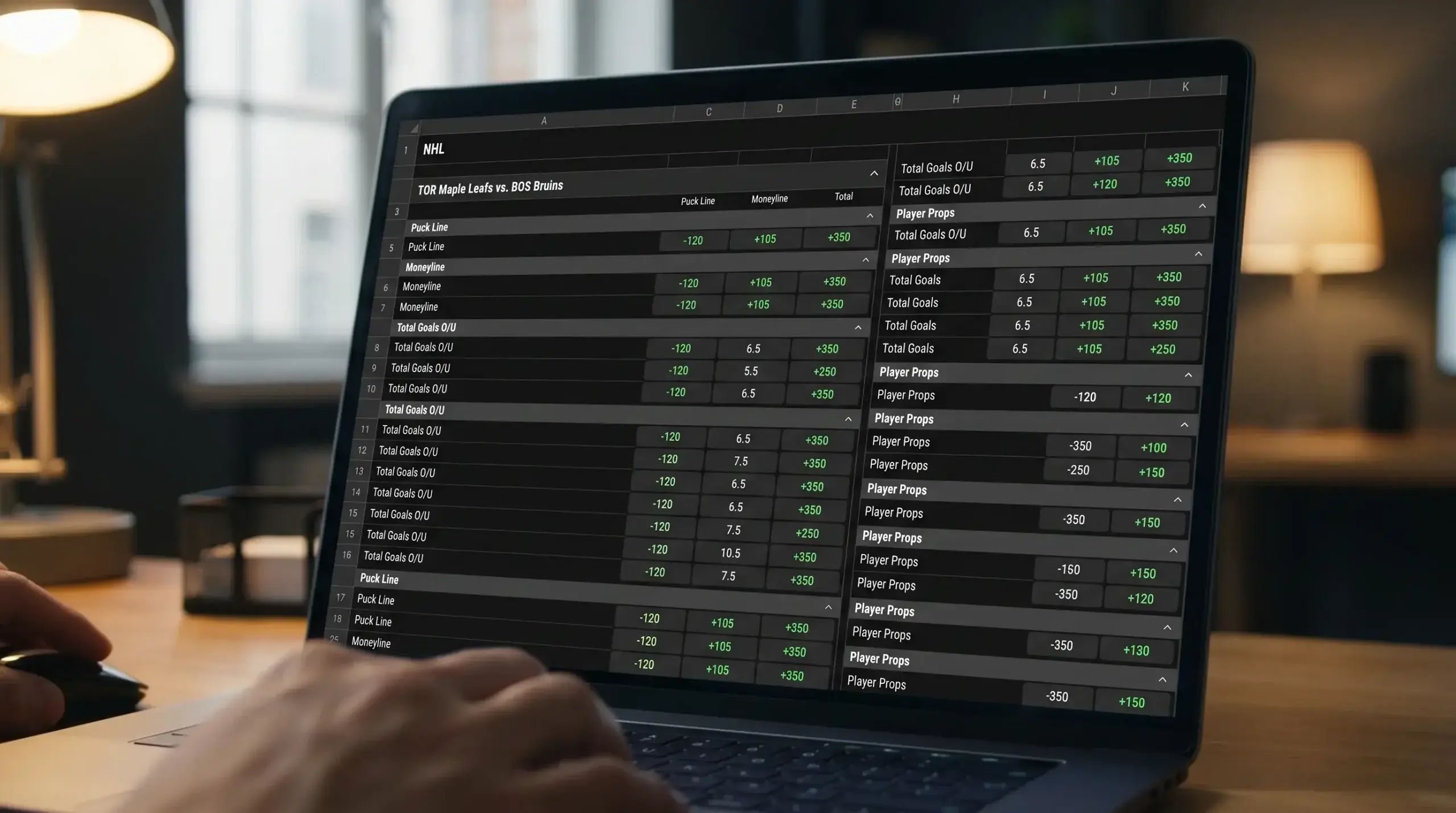
NHL Coverage Depth
When I say “coverage depth,” I’m not just talking about whether an operator lists NHL games. Everyone lists NHL games. I’m talking about how many markets they offer per game, whether they cover pre-season and All-Star events, and how quickly they post lines for upcoming matchups.
The NHL has official betting partnerships with FanDuel, DraftKings, ESPN BET, BetMGM, and Caesars — all US-facing operators. Those partnerships don’t directly affect what UK bookmakers offer, but they’ve pushed the entire industry toward richer hockey coverage. UK operators that want to attract hockey bettors have responded by expanding their menus, and the difference between a platform with 40 markets per game and one with 120 markets per game is the difference between having options and having an edge.
Pre-season games are a useful litmus test. If an operator posts lines for NHL exhibition matches in September, they’re treating hockey seriously. If they don’t open markets until opening night, they’re serving a casual audience. Neither is wrong, but knowing which type of platform you’re on helps set expectations.
EIHL coverage is another differentiator. Britain’s own ice hockey league — ten teams, over three hundred matches per season, with a cumulative attendance of nearly 1.25 million in 2024-25 — is offered by some UK operators but ignored by others. If you’re interested in domestic hockey alongside the NHL, check EIHL availability before signing up. It’s a niche market with thin pricing, but it’s there if you know where to look.
International hockey is growing as a betting product too. The Winter Olympics 2026 in Milan-Cortina will feature ice hockey with NHL players, and hockey was the most popular Olympic sport for wagering at the last Winter Games. If Olympic hockey betting interests you, confirm early whether your operator plans to offer those markets — not all of them will, and the ones that do will likely open their lines well before the tournament starts, giving early movers an advantage.
One thing I’ve noticed over the past three seasons: the operators with the deepest NHL coverage tend to be the ones that also offer the most competitive odds. That’s not a coincidence. Deep coverage signals investment in the sport, which usually means a dedicated hockey trading team that prices lines based on real analysis rather than simply copying another bookmaker’s numbers. If an operator lists 120 markets per game, they’ve probably got someone who understands hockey setting those lines. If they list 15, they’re almost certainly importing prices from a third-party feed and marking them up.
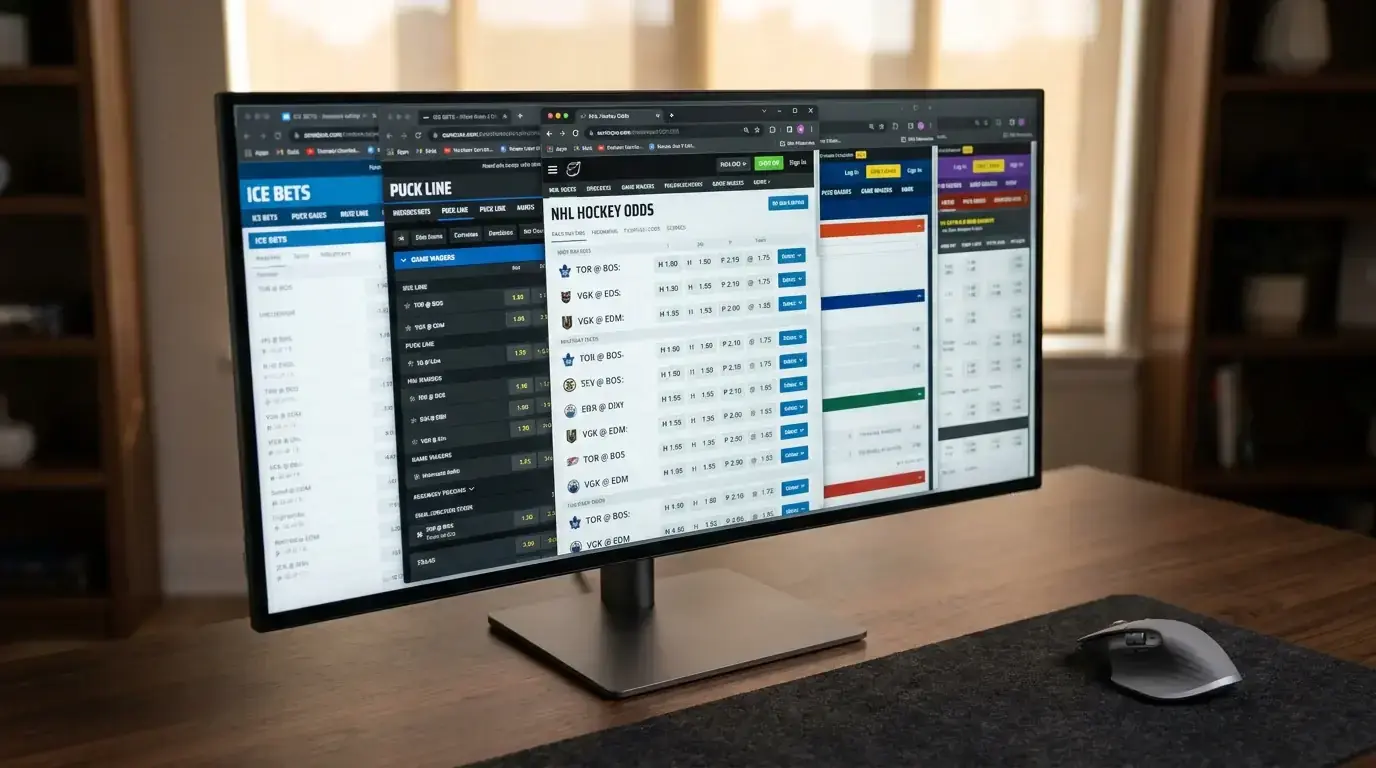
Bonuses and Restrictions
Welcome bonuses in UK gambling changed significantly in December 2025 when the UKGC banned cross-product promotions. Previously, an operator could offer “bet 10 GBP on sport, get 30 free spins in the casino” — a structure that blurred the line between sports betting and casino gambling. That’s gone now, and wagering requirements on any bonus are capped at ten times the bonus amount.
The Betting and Gaming Council’s Michael Dugher was quick to frame the decline in problem gambling rates as proof the industry is self-correcting — and proponents of the new rules cite the same data as evidence that tighter restrictions work. Whatever your view on the politics, the practical impact for you is that bonuses are simpler but less generous than they used to be. A free bet offer of 10 GBP with a ten-times wagering requirement means you need to wager 100 GBP before withdrawing any bonus-derived winnings. On NHL bets averaging 1.90 odds, that’s roughly 53 settled bets — not trivial.
My advice: use welcome bonuses to explore an operator’s NHL coverage without risking your own bankroll. Place a range of bet types — moneyline, puck line, props, live — and evaluate the experience. If the odds are competitive, the interface is functional, and the market depth is there, keep the account. If not, you’ve cost yourself nothing beyond time. For a fuller picture of the regulatory protections UK bettors should understand, including GamStop and deposit limits, I’ve written a separate guide.
One restriction that’s easy to miss: some operators limit maximum stakes on NHL markets far below what they allow for football. If you’re a higher-volume bettor, test the stake limits early. There’s nothing more frustrating than building a solid analytical process only to discover that your platform won’t let you bet more than 25 GBP on a single NHL prop.

Mobile Experience
Eight percent of UK adults placed sports bets online or through an app in any given month according to the Gambling Commission’s most recent survey. Mobile is no longer an alternative channel — it’s the primary one. And for NHL bettors who need to place wagers between 10 PM and 2 AM UK time, mobile is often the only practical option.
The features that matter on mobile for hockey are slightly different from football. Live betting responsiveness is critical because NHL markets move quickly during play stoppages and intermissions. A two-second delay in placing a live bet can mean getting a worse price or having the bet rejected entirely. Test the app’s live betting speed during an actual game before trusting it with real stakes.
Push notifications for goaltender confirmations are available on some apps and worth enabling. As I’ve discussed elsewhere, knowing who’s in goal is non-negotiable for NHL betting, and a notification that arrives at 5:30 PM UK time saves you from manually refreshing beat reporters’ feeds. Not every app offers this level of detail for hockey — many limit push notifications to football and racing — so check the settings during your trial period.
Interface design also matters more than you might think. NHL games often run concurrently, and navigating between three or four live markets simultaneously on a poorly designed app is a miserable experience. A good NHL betting app lets you switch between games with one tap, displays live stats alongside the odds, and doesn’t bury the puck line behind four sub-menus. These aren’t luxuries. They’re the basic infrastructure for taking hockey betting seriously on a mobile device.
Battery life and data usage are footnote considerations, but real ones. A live betting session during a three-game NHL evening can last four hours. If the app drains your phone’s battery in ninety minutes or chews through mobile data at an unreasonable rate, that’s a practical problem. I’ve moved away from operators whose apps run heavy background processes precisely because my phone was dying before the third period of the late game. Test this during your trial period — it’s easy to overlook and annoying to discover too late.

Odds Formats: UK Context
Every UK bookmaker defaults to either decimal or fractional odds, and most let you switch between the two in settings. NHL lines originate in the American format — the plus/minus system you see on US-facing platforms — and are then converted for the UK market. Understanding the conversion matters because rounding differences between formats can create tiny but real discrepancies.
Decimal odds are the clearest for NHL betting because they show the total return per pound staked. Odds of 2.15 mean 2.15 GBP returned for every 1.00 GBP wagered, including your stake. The implied probability is 1 divided by the decimal odds: 1 / 2.15 = 46.5%. That calculation takes two seconds and is far more intuitive than working out 23/20 in your head.
Fractional odds, the traditional UK format, work fine for simple bets but become unwieldy when you’re comparing prices across multiple markets. Is 11/8 better than 29/20? Both imply roughly the same thing (57.9% vs 59.2%), but the mental arithmetic is slower. For a sport where I’m comparing six or seven markets per game across three or four operators, decimal saves time and reduces errors.
American odds appear on research tools and US-oriented stats sites. Positive numbers (+150) indicate the profit on a 100-unit stake; negative numbers (-200) indicate how much you need to stake to profit 100 units. The conversion to decimal is straightforward: for positive odds, divide by 100 and add 1 (so +150 = 2.50). For negative odds, divide 100 by the absolute value and add 1 (so -200 = 1.50). I keep a conversion reference card saved on my phone for quick checks when I’m reading American-formatted research before placing a bet on a UK platform.
One practical tip: when comparing odds across operators, always use the same format. Mixing fractional from one site and decimal from another introduces cognitive overhead that leads to mistakes, especially late at night when you’re trying to get a bet placed before puck drop. Pick a format — I strongly recommend decimal — set it as your default on every platform, and stay consistent. The small time savings on each bet compound across a season of several hundred wagers.

UKGC Licensing: The Non-Negotiable Check
The scale of the UKGC’s enforcement operation is staggering. Between April and December 2025 alone, the Commission issued 592 cease-and-desist orders and flagged nearly 328,000 URLs to search engines, with more than 203,000 subsequently removed. Tim Miller, leading that effort as Executive Director, has been blunt about the Commission’s intent to make life as difficult as possible for unlicensed operators. The numbers tell you two things: unlicensed operators are aggressively targeting UK consumers, and the regulator is equally aggressive about shutting them down.
Before depositing a single pound with any operator for NHL betting, verify their UKGC licence. Every licensed operator displays a licence number and a link to the Gambling Commission’s public register in their website footer. If you can’t find it, don’t bet there. It’s that simple. An unlicensed operator has no obligation to pay you your winnings, no requirement to segregate customer funds, and no regulatory body to complain to if something goes wrong.
The UKGC licence also guarantees certain consumer protections: access to GamStop self-exclusion, mandatory deposit limit tools, activity statements showing your net position, and a complaints resolution process through an independent Alternative Dispute Resolution provider. These protections exist regardless of which sport you bet on, but they’re particularly relevant for NHL bettors who may be less familiar with the operators offering hockey markets. A bookmaker you’ve never heard of that offers outstanding NHL coverage is perfectly safe — provided they’re licensed.
One more thing: licensed operators are required to check that their marketing doesn’t target vulnerable consumers and that their bonus terms are transparent. If you encounter an operator whose promotional language feels misleading or whose terms bury important restrictions in tiny print, that’s a signal worth heeding. Not every operator with a licence is equally customer-friendly, but the licence at least sets a floor below which they legally cannot fall.
The enforcement numbers also underscore a point about unlicensed operators that sometimes gets lost in discussions about market choice: some of these sites offer genuinely attractive NHL odds, which is how they lure customers. The odds are attractive because unlicensed operators don’t bear the cost of compliance — they don’t fund responsible gambling tools, they don’t segregate customer funds, they don’t submit to audits. The lower operating cost lets them post flashier prices. That price gap is the bait. The lack of any legal recourse when something goes wrong is the trap. I’ve spoken with bettors who have had five-figure balances frozen by unlicensed operators with no path to recovery. The story always starts the same way: “But the odds were so good.”
Stick with UKGC-licensed platforms. Compare their prices, push for value, and hold them accountable through the regulatory framework that exists for exactly that purpose. The odds might occasionally be a tick worse. The peace of mind — and the legal protection — is worth every penny.