


I have written thousands of words on this site about finding edges, building models, and exploiting market inefficiencies. None of that matters if you cannot bet within your means. I have watched sharp bettors with genuine skill destroy themselves by ignoring bankroll limits during a bad stretch, and I have watched recreational punters spiral from casual NHL wagers into daily deposits they could not afford. Responsible gambling is not a disclaimer tacked onto the end of an article — it is the structural foundation that keeps everything else standing.
UKGC Protections
The UK Gambling Commission exists to keep gambling fair, safe, and crime-free. The scale of their enforcement tells you how seriously they take the job: Tim Miller, the UKGC’s executive director, has spoken publicly about issuing hundreds of cease-and-desist orders to illegal operators and reporting nearly 398,000 illegal URLs to search engines in a single year, with roughly 267,000 of those removed. That is the visible part of the regulatory apparatus.

The less visible part — and the part that directly affects you as a bettor — is the licensing conditions that every UKGC-licensed operator must follow. These include mandatory identity verification before you can withdraw funds, age verification before your first deposit, and a requirement to monitor customer behaviour for signs of harm. Problem gambling rates in the UK sit at 2.7% based on the Problem Gambling Severity Index score of 8 or above. Among men, the rate is 6%, and among 18-to-24-year-olds it reaches approximately 10%. Those numbers are not abstract — they represent real people who crossed a line they did not see coming.
Miller has also stated that there is a group of vulnerable customers not being identified by existing approaches, and that the status quo cannot hold. The regulatory direction is toward more intervention, not less, and NHL bettors in the UK should expect tighter controls on deposit velocity, loss limits, and affordability checks in the coming years. Understanding the current rules prepares you for what is coming next.
GamStop and Self-Exclusion
GamStop is the UK’s free national self-exclusion scheme. Register with GamStop and every UKGC-licensed online gambling operator is required to block your account for a minimum period — six months, one year, or five years, depending on your choice. The system is designed as a circuit breaker: if you recognise that your gambling is becoming harmful, GamStop removes access to the temptation.

Some operators estimate problem gambling rates as low as 0.2% using more conservative measurement tools. Even at that floor figure, 0.2% of the UK’s active betting population of 12.7 million accounts represents over 25,000 people experiencing serious harm. Self-exclusion tools exist because even a small percentage of a large population translates into a significant number of individuals who need protection.
I have never used GamStop myself, but I have spoken with bettors who have. The consensus is that it works as intended: it creates a barrier that is difficult to circumvent and forces a cooling-off period that most users describe as valuable in retrospect. If you are reading this and feel uncertain about your relationship with betting, registering with GamStop is a strength, not a weakness. The tools exist precisely because the industry recognises that some people need them.
Setting Personal Limits
Every UKGC-licensed bookmaker must offer deposit limits, loss limits, and session time reminders. These tools are available in your account settings, and I recommend activating all three before you place your first NHL bet of the season.

Since December 2025, new regulations have banned cross-product promotions — you can no longer receive a casino bonus for placing a sports bet, and wagering requirements on all bonuses are capped at ten times the bonus amount. These rules were introduced specifically because cross-product promotions encouraged bettors to engage with higher-risk products they had not originally sought out. For NHL bettors, this means the bonus landscape is simpler and less predatory than it was two years ago.
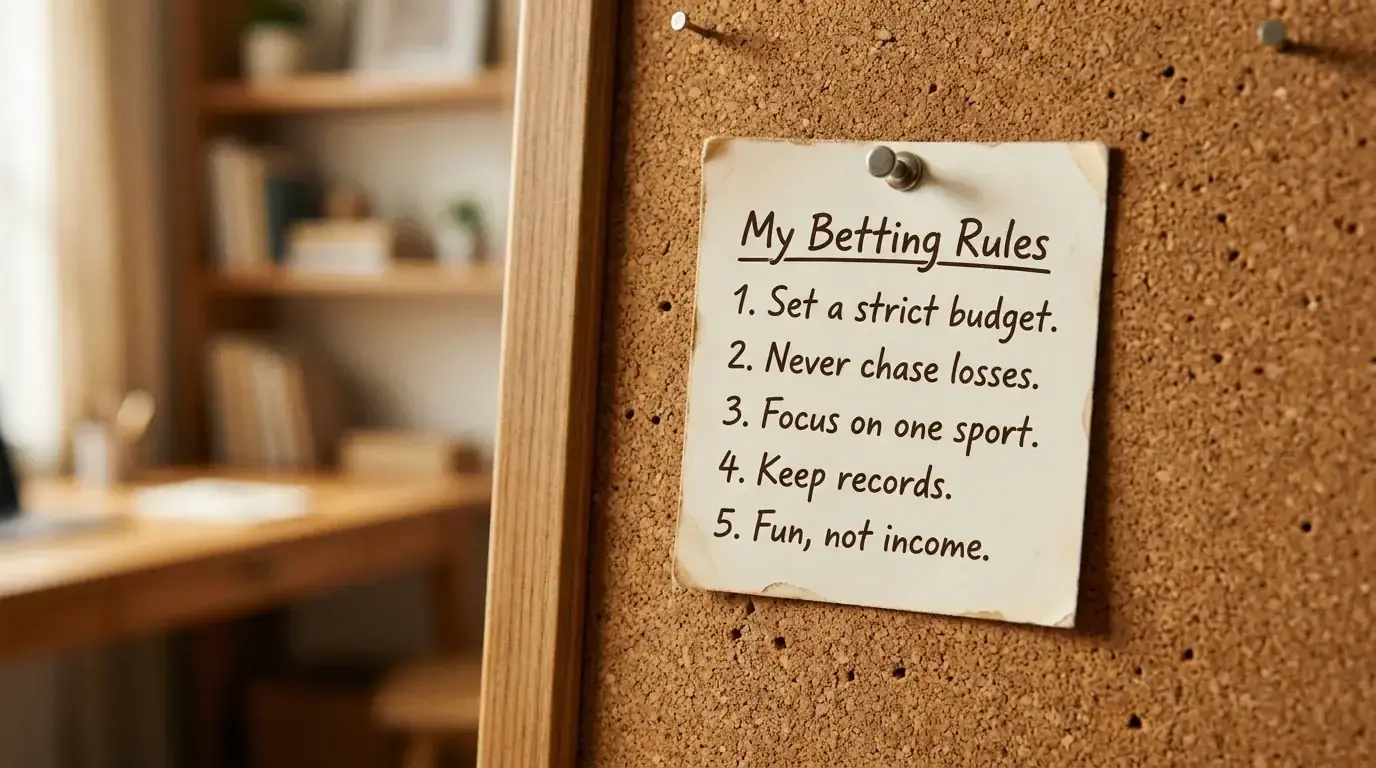
My personal limits are straightforward: I set a weekly deposit cap at the start of each month that equals my planned betting activity plus a 20% buffer for opportunities I did not anticipate. I never increase that cap mid-month, even during the playoffs when the temptation to bet more intensely is strongest. I also set a session time reminder at 90 minutes — if I have been looking at odds boards and placing bets for an hour and a half without a break, the app prompts me to step away. That prompt has saved me from more impulsive late-night bets than I can count.
The broader point is that responsible gambling tools are not restrictions on your freedom — they are guardrails that keep your betting disciplined. The same mindset that drives good bankroll management and flat-unit staking also drives the use of deposit limits and session timers. All of it points in the same direction: treating NHL betting as a structured, controlled activity with clear rules and boundaries, not as an open-ended emotional ride.
Recognising When to Step Back
The red flags are not subtle once you know what to look for. Chasing losses — placing bigger bets to recover money you have already lost — is the most common. Betting money earmarked for rent, bills, or essentials is another. Lying to friends or family about how much you are betting, or feeling anxious or irritable when you cannot place a bet, are both signs that the activity has moved beyond entertainment.

I review my betting logs at the end of every month not just for ROI but for behavioural patterns. Did I increase my unit size during a losing streak? Did I place bets on games I had not analysed, just to have action? Did I stay up until 3am watching a game I had no analytical reason to follow, simply because I had money on it? Any “yes” triggers a week-long break from betting — no exceptions. That self-imposed discipline is worth more than any edge I have ever found in the odds.
