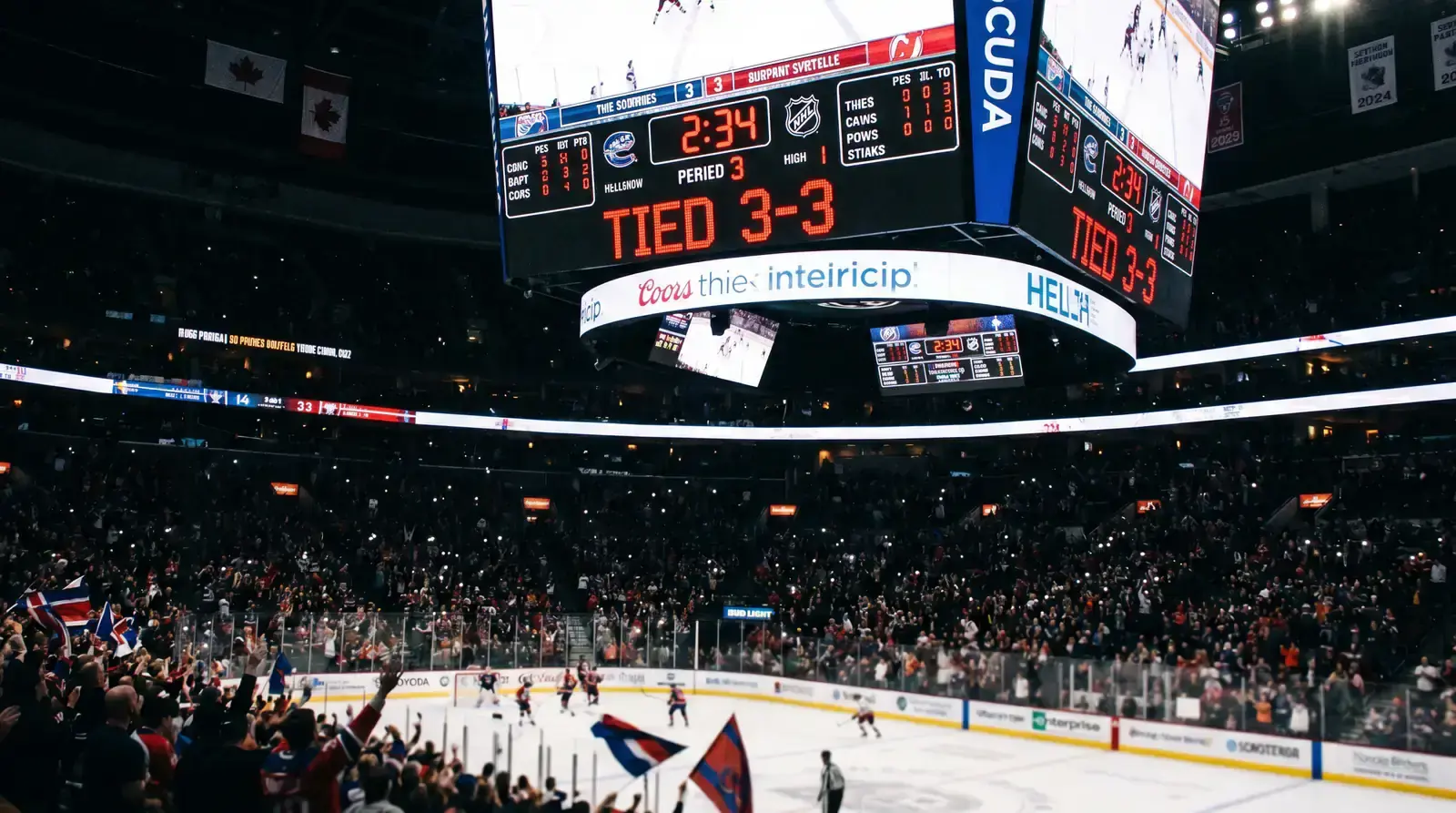

The best bet I placed last season was not made before puck drop. It was 14 minutes into the second period of a game where the home team was trailing 2-0 but dominating possession, outshooting the opponent 28-14 and generating nearly twice the expected goals. The live moneyline had drifted to 3.40 — a price that drastically overweighted the scoreboard and ignored everything happening underneath it. I backed the home side, they scored three unanswered in the third, and I collected at odds that pre-game would have been absurd. That is the promise of live betting: the market reacts to what has happened, and you can exploit the gap between what has happened and what is likely to happen next.
Live Market Structure
Live NHL betting has expanded enormously in the past three years. The league’s sportsbook handle keeps growing — the rising tide Keith Wachtel described is especially visible in the in-play segment, where technological improvements allow bookmakers to update odds in near real-time. The most common total line in the NHL is 6.5 goals pre-game, but that number reshapes entirely once the puck drops. After a scoreless first period, you might see the live total drop to 5.5 or even 4.5 depending on the pace. After three goals in the first ten minutes, it could spike to 8.5.
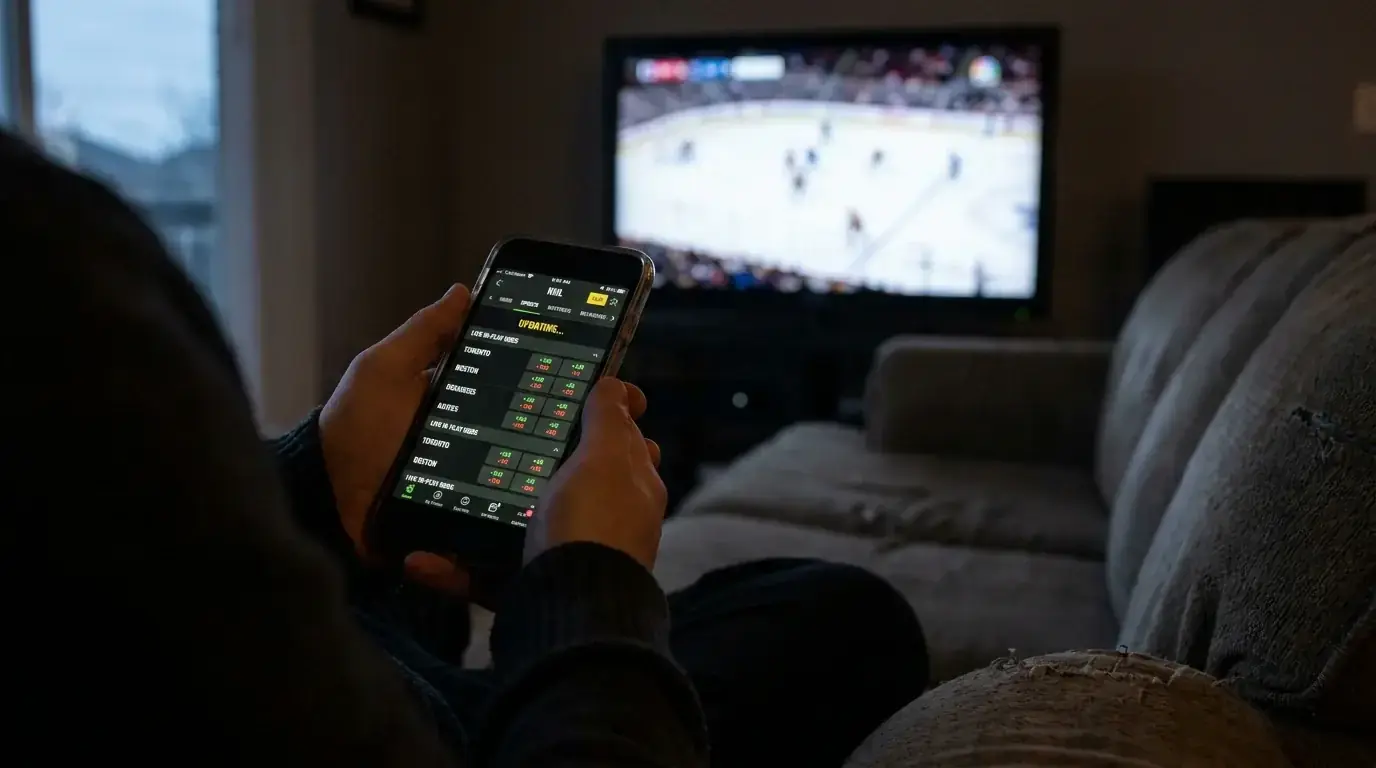
UK bookmakers typically offer live moneyline, live total, next goal, and period-specific markets during NHL games. The depth varies — larger operators provide 30 or more in-play markets, while smaller ones stick to the basics. What matters for your edge is not the number of markets but the speed of the odds update. Bookmakers with faster algorithms price more efficiently, which reduces your window. Operators with slower systems — and there are several serving the UK market — lag behind by 30 to 90 seconds after a significant event, which is where live bettors make their money.
One structural quirk of NHL live betting: commercial breaks during stoppages create predictable windows where odds freeze and you can place bets without the fear of immediate price movement. I use these windows to get my orders in, particularly after a penalty is called. A power play immediately shifts the expected goal probability, but the live total and moneyline sometimes take a full TV timeout to adjust.
Momentum Shifts and How to Read Them
Momentum in hockey is real but misunderstood. The casual viewer sees a team score and assumes they have momentum. The data tells a different story: the team that just scored is actually at elevated risk of conceding in the next two minutes because they often relax defensively after celebrating. I have tracked this for three seasons and the post-goal vulnerability window is consistent — teams allow a higher rate of high-danger chances in the 120 seconds following their own goal than at any other point in the game.
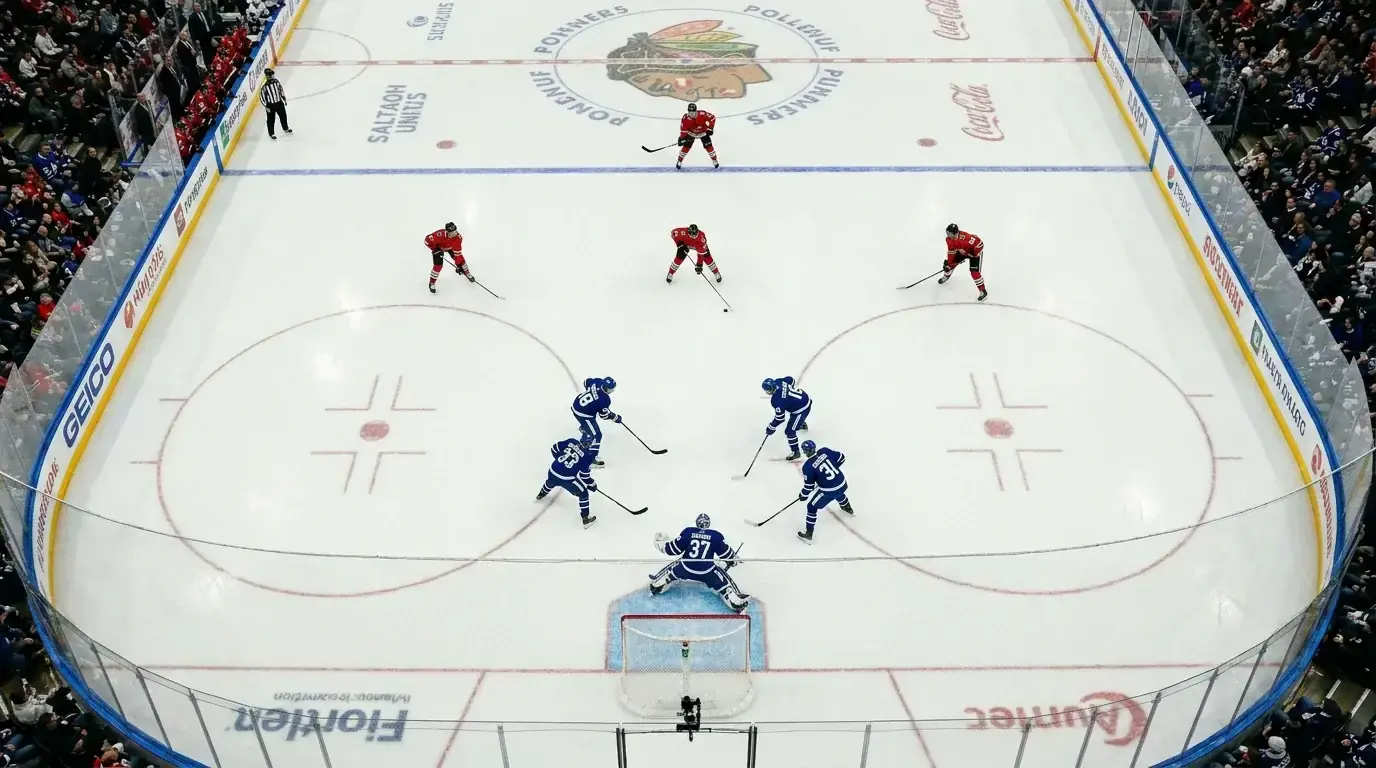
The momentum shift I actually bet on is sustained possession dominance that has not yet converted to goals. When one team controls 60% or more of shot attempts through a period but the score is level or they trail, the live odds overreact to the scoreboard. The underlying performance data says the dominant team is more likely to score next, but the odds reflect the current score. That disconnect is pure value.
I track live Corsi data — shot attempts for and against — during games using free data feeds that update period by period. If the Corsi differential exceeds +15 and the dominant team is priced at 2.00 or above on the live moneyline, I back them. The hit rate on this filter is not astronomical — roughly 55% — but at those odds, 55% is more than enough for consistent profit. The key is patience: you cannot place this bet after every period. You wait for the data to present the specific conditions, then act decisively.
The Goalie-Pull Window
The final three minutes of a close NHL game are the most volatile in all of sport for live bettors. When a team trails by one goal, they pull their goaltender for an extra skater — six skaters against five, with an empty net at one end. The league-wide save percentage already sits at 89.6% this season, and that number drops to zero during a goalie-pull situation because there is no goalkeeper to save anything.

Here is how I play it. If a game is 3-2 with four minutes remaining and I expect the trailing team to pull their goalie, I look at the live total. The over becomes significantly more attractive because the empty-net scenario produces roughly 0.4 expected goals per minute of 6-on-5 play — an extraordinary rate. Whether the trailing team equalises or the leading team scores an empty-netter, goals are coming. The live total at this stage is often set at 0.5 or 1.5 for the remainder of the game, and the over on 0.5 is a high-probability play at odds that still offer value because the bookmaker prices in the possibility of a quiet final stretch.
The moneyline during the goalie-pull window is trickier. The leading team’s odds compress to 1.10 or 1.15 — too short for the risk, given that trailing teams equalise roughly 15-20% of the time during the pull. I avoid live moneylines in the final two minutes unless the odds are dramatically misaligned. The over on the live total is the cleaner play, and the one I return to across market types most reliably.
Discipline in the Live Market
Live betting punishes impulsiveness more than any pre-game market. The speed of events creates an emotional urgency — you feel like you must bet now or the opportunity vanishes. Sometimes that is true. More often, the next opportunity is two minutes away and arrives with better information.

I cap my live bets at three per game. Any more than that and I am reacting rather than analysing. Each live bet follows the same process as a pre-game bet: identify the edge, confirm the odds represent value, check the stake against my bankroll rules. The only difference is compression — I have 30 seconds to execute a decision that I would normally take 30 minutes on. That compression is why live betting is not for beginners. Master pre-game markets first, learn to read shot data and possession metrics, and then the live market becomes an extension of skills you already have rather than a new game entirely.