


Three seasons ago I tracked every NHL moneyline bet I placed over a full regular season — 412 wagers in total. The record that stung most was not any single loss but a pattern: I was profitable on underdogs priced between 2.50 and 3.20, dead even on short favourites below 1.60, and bleeding money on heavy favourites above 1.30. That breakdown reshaped my entire approach to straight-up NHL betting. The moneyline looks like the simplest market in the book, but the pricing structure punishes lazy thinking faster than any other wager type.
NHL underdogs won 39.1% of all games in the 2024-25 season, trailing only baseball for the highest upset rate among major North American sports. That number alone should make any bettor pause before laying steep juice on a favourite. The moneyline is not about picking winners — it is about finding spots where the price does not reflect reality.
How Moneyline Pricing Works in the NHL
I spent my first year of NHL betting confused about why two teams with apparently similar records could be priced so differently on a Tuesday night. The answer lies in how bookmakers construct their lines, and understanding that process is the first step toward identifying genuine value.
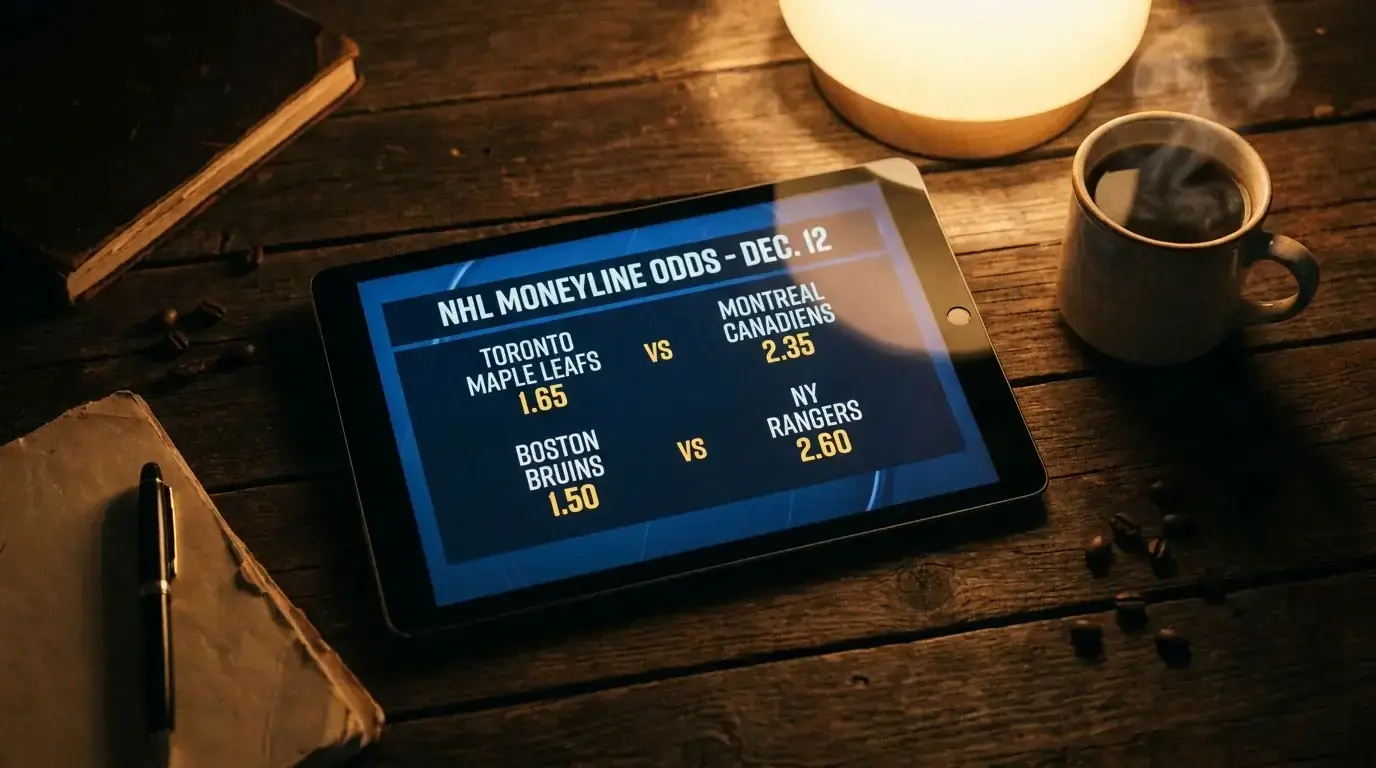
Every moneyline starts with the bookmaker’s model generating an implied probability for each side. They convert that probability into decimal odds, then add their margin — the overround — which is their profit mechanism. A fair 50-50 game would be priced at 2.00 on each side in a zero-margin market. In reality, your UK bookmaker might price it at 1.87 and 1.87, building in about a 7% margin. That spread between the true probability and the offered price is what you are fighting against every time you click “place bet.”
The critical insight is that bookmaker margins are not distributed evenly across both sides. On heavily-bet favourites, the margin tends to be slimmer because the book wants action and the market is efficient. On obscure Tuesday-night matchups between mid-table teams, the margin widens. Home underdogs in the 2024-25 season won at a rate of 44.4% — meaningfully higher than the implied probability their odds suggested. That gap between what the odds say should happen and what actually happens is where moneyline value lives.
Favourite vs Underdog on the Moneyline
Here is the uncomfortable truth I had to accept early in my career: backing favourites on the moneyline is a losing strategy over the long term unless you are extraordinarily selective. Home underdogs covered against the spread 63.9% of the time in 2024-25, while home favourites managed only 41.8%. That ATS data bleeds into moneyline dynamics because it reflects the same underlying reality — the market overvalues favourites and undervalues underdogs.

The data between 2015 and 2020 showed NHL underdogs winning outright 41.4% of the time. The 2024-25 figure of 39.1% represents a slight decline, but the structural edge remains. The NHL’s salary cap ensures a level of parity that other leagues cannot match. Even the weakest teams in the league employ elite-level goaltenders who can steal games on any given night, which is why blindly fading underdogs is a recipe for erosion.
When I do back favourites, I impose strict criteria. The favourite must be at home, priced between 1.55 and 1.80, with their confirmed starting goaltender carrying a save percentage above .915 on the season. The opponent should be on the road with a below-average penalty kill. I also want to see the line holding steady or drifting toward the favourite — a sign that sharp money agrees with the public on this one. Without those filters, laying moneyline juice on favourites is a slow bleed disguised as conservative betting.
Situational Moneyline Spots
The NHL schedule is a 1,312-game marathon across 82 nights per team, and the grind creates pockets of predictable inefficiency. I have spent years cataloguing these spots and three consistently produce moneyline value.

The first is the home team after a loss of three or more goals. Teams that get blown out at home tend to respond with urgency in their next game, particularly if the coach shuffles the lineup. The moneyline on these bounce-back games often does not adjust enough for the motivational lift, especially when the next game is also at home.
The second is road underdogs on the first game of a road trip. Fresh legs, full preparation, and a team eager to start a trip well — these factors make the first road game less of a disadvantage than games three or four of a road stretch. The line prices all road games with a similar discount, which creates an opening on game one.
The third is the letdown spot: a top team that just played a rivalry game or a nationally televised showcase and now faces a perceived weaker opponent. The emotional hangover is real, and I have tracked a consistent 3-4% win rate drop in these spots over the past four seasons. When the underdog’s moneyline sits at 2.80 or above in a letdown game, I am interested. Home teams across the league won 56.6% of all matches in 2024-25, a stable trend — but that number drops noticeably in letdown spots where the public assumes the favourite will coast.
Timing and Line Shopping
I place roughly 70% of my moneyline bets between 10am and noon UK time on game day. That window captures the sweet spot after overnight line movement from the North American sharps and before the afternoon wave of public money arrives. Opening lines posted the night before carry the most value — if you can catch them — but the mid-morning window is the practical alternative for anyone without an alarm set for 4am.

Line shopping across two or three UK bookmakers is non-negotiable on moneyline bets. A shift from 2.20 to 2.30 on an underdog looks marginal on a single bet, but compounded over a season of 200+ wagers, it is the difference between a profitable year and a break-even one. I keep accounts open at multiple UKGC-licensed operators specifically for this purpose. The margin differences between operators are largest on NHL underdogs and smallest on heavyweight favourites — which is another structural reason to focus your moneyline activity on the dog side.
One final note: resist the temptation to parlay moneyline favourites. A three-leg favourite parlay looks safe at 1.50, 1.60, and 1.55 — combined odds around 3.72. But your actual win probability is roughly 24%, and the odds should be closer to 4.20 for the true risk. The bookmaker margin stacks multiplicatively in parlays, and moneyline favourites are the worst building blocks because each leg carries negative expected value that compounds leg by leg.
